


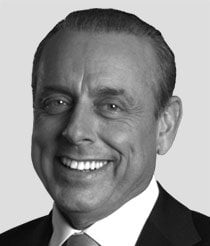
[Editor's Note: Shah Gilani, a retired hedge fund manager and noted expert on the global credit crisis, predicted this developing FHA debacle in a July 2008 Money Morning essay.]
Is the government creating another subprime-mortgage bubble?
The first time around, the three-headed federal serpent - the Bush administration, the Treasury Department and the U.S. Federal Reserve - used Fannie Mae (NYSE: FNM) and Freddie Mac (NYSE: FRE) to "legitimize" trillions of dollars worth of toxic financial waste known as subprime mortgages.
The result was the worst financial crisis since the Great Depression - a mess that was global in nature.
And we're now headed for a repeat performance.
Some of the players may have changed since the first subprime-mortgage crisis, but the game apparently remains the same. With banks currently unwilling to lend, the new federal triumvirate of the Obama administration, the Treasury and the Fed are trying to inflate the moribund U.S. housing market. This time around, however, the FHA is the weapon of choice.
Obama & Co. are making an all-or-nothing bet that the U.S. economy will recover and bail out the housing market before the final bill for this ill-advised gambit comes due.
When this bubble bursts - and it will - U.S. taxpayers will be on the hook for more than $1 trillion in government-guaranteed debt.
Ginnie Mae: Fannie and Freddie's Once-Quiet Cousin
As a direct result of the real-estate meltdown, U.S. banks have become reluctant lenders. And they've raised their loan standards considerably. Federal officials knew they had to keep the mortgage spigot open, especially to suspect borrowers, so they turned to their new "secret weapon" - the FHA.
The FHA has been cranking out new government-insured subprime loans, which it packages into government guaranteed securities for sale to banks. This frightening reflation of the subprime bubble is being engineered for two key reasons:
- To put a floor under falling house prices.
- And to let banks swap toxic Fannie and Freddie securities for new toxic debt that is 100% guaranteed by U.S. taxpayers.
The almost inevitable insolvency of the FHA could rapidly undermine the fragile recovery of the U.S. economy. And it could plunge stock prices and bank viability to new lows.
Why the FHA?
That's simple. In an era of increasingly stringent lending standards, the FHA's standards are laughably lax.
Created by the National Housing Act of 1934, the FHA insures private mortgage lenders against borrower default on residential real estate loans. But its current allure is that it opens the door to prospective homebuyers who almost certainly wouldn't qualify for a conventional home mortgage. These are buyers with no credit history, a history of credit problems, or not enough cash to cover the down payment and closing costs.
The FHA has quadrupled its insurance guarantees on mortgages in just the last three years, with the bulk of that growth coming in the past two years. Currently, the FHA insures $560 billion of mortgages.
Loans that are FHA-insured are pooled and packaged into mortgage-backed securities (MBS) by the Government National Mortgage Association, more commonly known as Ginnie Mae. Ginnie Mae insures the actual MBS pools composed of FHA loans. Ginnie Mae securities are the only mortgage-backed securities backed by the full faith and credit of the U.S. government.
Two weeks ago, Ginnie Mae proudly announced that it had issued a monthly record $43 billion in FHA mortgage-backed securities, and through the end of July held guaranteed securities with a value of $680 billion. It is on track to exceed $1 trillion worth of guaranteed securities by the end of calendar year 2010.
Ginnie Mae is a cousin of its better-known siblings Fannie Mae and Freddie Mac. Those two mortgage giants are technically insolvent, and were forced into government conservatorship at the height of the financial crisis - ostensibly due to concerns that foreign central banks in China, Japan, Europe, the Middle East and Russia might stop buying our bonds. As "government-sponsored enterprises," or GSEs, Fannie and Freddie were only supposed to have the "implicit" backing of the U.S. government. But recent events have shown these to be fully backed by taxpayers.
The implosion of Fannie and Freddie severely threatened the mortgage market. It essentially shut down the two giant repositories that bought the loans banks and mortgage originators didn't want to hold as assets on their own balance sheets.
The FHA and its mortgage-backed securities "factory" - Ginnie Mae - have taken up where Fannie and Freddie left off, and are now the dumping ground for toxic mortgages. Using the FHA is the core strategy in the administration's misguided effort to prop up mortgage origination and modifications, real estate prices and insolvent banks.
Warning Signals?
Administration officials might want to take heed of some eerie parallels between the current situation and the one involving Fannie and Freddie. They could serve as an early warning system.
First and foremost, the FHA has already started to acknowledge systemic fraud in its business. In the earlier subprime crisis, similar circumstances led to the revelation of massive fraud in the issuance, packaging, ratings and sale of subprime toxic mortgage-backed securities.
On Aug. 4, the FHA suspended Taylor, Bean & Whitaker Mortgage Corp., one of its largest approved independent mortgage originators, from making anymore FHA-backed loans. The suspension came one day after federal investigators raided Taylor Bean's Ocala, Fla., headquarters.
Since 2007, the value of FHA-backed loan originations underwritten by Taylor, Bean had soared 117%. By contrast, the origination of conventional loans by the firm dropped 34% over the same period. Taylor, Bean subsequently filed for bankruptcy.
Earlier this summer, the U.S. Department of Housing and Urban Development (HUD), which oversees the FHA, raised concerns about FHA practices. On June 18, HUD released an internal inspector general's report that revealed that the FHA's default rate exceeded 7% and that more than 13% of its insured loans were delinquent by more than 30 days.
In a "Review and Outlook" piece, The Wall Street Journal reported that the FHA's reserve fund dropped from 6.4% in 2007 to about 3% today, putting it dangerously close to its mandated 2% minimum. That translates to a "33-to-one leverage ratio, which is into Bear Stearns territory," the newspaper report stated, referring to the now-failed investment bank that had been a central player in the original subprime mortgage crisis.
Bear Stearns is now owned by JPMorgan Chase & Co. (NYSE: JPM).
The HUD inspector general's report stated that the agency's growth makes it "vulnerable to exploitation by fraud schemes" and that it may need "Congressional appropriation intervention."
In a recent article - "FHA Disputes Whispers of Capital Reserve Problems" - on the Mortgage News Daily Web site, HUD Secretary Shaun Donovan said in June that "there's a better than even chance that we will stay above the two percent reserve threshold. That suggests, not just for the 2010 business, but overall for the portfolio, that we'll more than likely to stay out of a broader need for any taxpayer funding."
It may be more than a little disheartening to know that in a very uncertain economic environment, precisely due to fraud in mortgage lending and increasing borrower defaults, that our government is stretching a 50/50 wager on the backs of taxpayers.
That's only part I of the FHA dilemma story.
Part II is even more frightening.
A Look Ahead
Banks are dumping Fannie and Freddie-backed securities onto the Fed's balance sheet and replacing them on their own balance sheets with FHA-insured loans packaged into government-insured securities issued by Ginnie Mae. Banks aren't reducing their net assets, they are aggressively swapping acknowledged toxic securities that no-one wants for a new variety that no one will want in the future. Why?
It's not just that Ginnie Maes are fully backed by the U.S. taxpayers and Fannie and Freddie's securities are only implicitly backed. All of them will be covered by taxpayers.
The devil is in the details.
Because Fannie and Freddie securities are only implicitly guaranteed, banks that hold these securities as assets on their balance sheets must "haircut," or set aside reserves, based on a 20% risk-weighting assigned to the value of those holdings.
Because Ginnie Maes are explicitly 100% guaranteed, they are considered "risk free," and on par with U.S. Treasury bonds, notes and bills. There is no reserve requirement, or haircut, on Ginnie Mae securities.
By replacing their asset mix and holding Ginnie Maes, banks don't have to set aside reserves. They can use the money they otherwise would have to set aside to actually leverage-up their balance sheets. And guess what they're buying?
More Ginnie Maes, naturally.
The effect of the asset swap - basically one toxic pool for a replacement that's not much better - creates the illusion that banks have healthier balance sheets and that they are meeting their reserve requirements. It's such a good deal for the banks and actively promoted by the Fed and Treasury, that banks are using Troubled Assets Relief Program (TARP) money to buy Ginnie Maes.
But it's all a façade.
Capital ratios are being manipulated and insolvent banks are being propped up.
The danger of relying on the FHA to prop up the shaky housing market by facilitating mortgage origination, modifications and refinancing to less-than-stellar borrowers will only result in more subprime loans being stockpiled on the Federal Reserve balance sheet.
Eventually, defaults will overwhelm the FHA. And the hoped-for floor in residential real estate pricing will be pulled out from under us all. The next down-round in real-estate values will expose bank balance sheets for what they really are: Over-leveraged and over-stuffed with junk. Already on the ropes, banks will lose capital and will have to tighten the credit screws on consumer borrowers even more.
We may be headed for another bruising round of real-estate and MBS-related depreciation. Even a mild financial-markets setback could put the economy and the stock market onto the canvas for a 10-count. Further pummelling of shaky consumer confidence accompanied by a couple of major bank failures could easily send the U.S. market down for the financial-system equivalent of a TKO.
Taxpayers, always the lowly cornermen holding the spit buckets, are already in place with the safety nets. We will catch the FHA loans because we insure private lenders against subprime borrowers with no skin in the game. We then will have to catch the buyers of Ginnie Maes, because we guarantee those MBS securities. And we will be forced to catch the falling banks, because we already insure depositors through the Federal Deposit Insurance Corp. (FDIC).
Perhaps our ultimate fate is that of the permanently punchdrunk veteran boxer, who rues his decision to stay in the game, realizing that he fought "one bout too many." If that's the case, that "one bout too many" could be Subprime Crisis II, arranged by the very market referees whose job it was to protect us from such beatings.
News and Related Story Links:
- Money Morning Investigative Report on the Bank Bailouts (Part I):
Foreign Bondholders - and not the U.S. Mortgage Market - Drove the Fannie/Freddie Bailout. - Wikipedia:
Subprime Mortgage Crisis. - Associated Content:
National Housing Act of 1934. - SEC.gov:
Mortgage-Backed Securities. - About.com:
What is a Ginnie Mae Security? - InvestorWords.com:
What is Full Faith and Credit? - InternationalForecaster.com:
Great Doubts for the Benefit of the Stimulus Package. - Wikipedia:
U.S. Department of Housing and Urban Development. - Investopedia:
Government-Sponsored Enterprise. - The Wall Street Journal:
Taylor Bean Suspended From Making FHA Loans. - The Orlando Sentinel:
Ocala-based Taylor, Bean & Whitaker Mortgage files for Chapter 11. - Wikipedia:
Bear Stearns Cos. - Mortgage Daily News:
FHA Disputes Whispers of Capital Reserve Problems. - Money Morning News Analysis:
Inside Wall Street: That Ticking Sound You Hear Out in the Mortgage Market is the FHA.
About the Author
Shah Gilani boasts a financial pedigree unlike any other. He ran his first hedge fund in 1982 from his seat on the floor of the Chicago Board of Options Exchange. When options on the Standard & Poor's 100 began trading on March 11, 1983, Shah worked in "the pit" as a market maker.
The work he did laid the foundation for what would later become the VIX - to this day one of the most widely used indicators worldwide. After leaving Chicago to run the futures and options division of the British banking giant Lloyd's TSB, Shah moved up to Roosevelt & Cross Inc., an old-line New York boutique firm. There he originated and ran a packaged fixed-income trading desk, and established that company's "listed" and OTC trading desks.
Shah founded a second hedge fund in 1999, which he ran until 2003.
Shah's vast network of contacts includes the biggest players on Wall Street and in international finance. These contacts give him the real story - when others only get what the investment banks want them to see.
Today, as editor of Hyperdrive Portfolio, Shah presents his legion of subscribers with massive profit opportunities that result from paradigm shifts in the way we work, play, and live.
Shah is a frequent guest on CNBC, Forbes, and MarketWatch, and you can catch him every week on Fox Business's Varney & Co.