


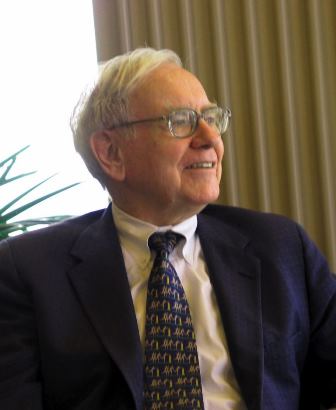
Warren Buffett's Berkshire Hathaway meeting for shareholders this weekend let investors - not just Berkshire (NYSE: BRK.A; BRK.B) investors - get some nuggets of wisdom from the 83-year-old billionaire.
Berkshire's earnings are meticulously scrutinized every quarter because its investments include a number of well-known consumer-oriented components. Stock holdings include American Express Co. (NYSE: AXP), Coca-Cola Co. (NYSE: KO), Exxon Mobil Corp. (NYSE: XOM), International Business Machines Corp. (NYSE: IBM), and Wal-Mart Stores Inc. (NYSE: WMT).
Also closely examined and widely attended is Berkshire's annual shareholder meeting. Following are five highlights from Saturday's event, which drew some 38,000 shareholders, analysts, and journalists.
Five Highlights from Warren Buffett's Berkshire Hathaway Meeting
- During the Q&A session, Buffett was asked to name the one stock he'd put all of his net worth into. Asked the same question during the 2009 annual meeting, Buffett answered Wells Fargo (NYSE: WFC). Since then, WFC shares have surged some 150%, comfortably beating the S&P 500's returns over the same period. This time around, Buffett not only didn't say Wells Fargo, he politely declined to answer. Investors clamoring to hear about Buffett's latest buys will have to wait until Berkshire's next 13F SEC filing.
- The question of if and when Berkshire will pay a dividend comes up early and often at Buffett's shareholder meeting. The answer is always the same. Buffett says he believes reinvesting Berkshire's cash is worth more for shareholders than they would receive in a dividend. As Buffett controls 34% of the company's voting power, any dividend proposal is highly unlikely to pass without his support. And, since Buffett' s eldest son Howard is slated to keep watch over Berkshire's culture when his father is no longer running the company, investors shouldn't expect a dividend when that time comes.
- What investors can expect are more global deals. Buffett said Berkshire very much wants to invest around the world. "We have not had as much luck getting on the radar screen of owners around the world as we have in the United States," Buffett said. "I've been a little disappointed that we haven't had as much luck outside the country." Any new deals are apt to be big given that Berkshire's massive size requires it go after large targets for growth. Buffett also said he'd like to partner again with 3G Capital, the Brazilian firm he teamed with in 2013 to buy H.J. Heinz in a $23.3 billion deal. "We're very likely to partner with them, perhaps on some things that are very large," Buffett said. He added, "What we really want to do at our present size and scope (is) buy big businesses with good management and prices, and then build them over time." Indeed, much of Berkshire's growth has come from acquisitions.
- At the end of Q1, Berkshire's cash stash stood at a whopping $48 billon. Buffett acknowledged the company's cash was accumulating at such a rapid rate that the day may be fast approaching when they would run out of ways to "intelligently invest" the cash. But, Berkshire will never feel the need to spend the cash simply for the sake of spending. Buffett said Berkshire would mull engaging in future stock buybacks, adding the company will repurchase shares should they dip below 1.2 times book value.
- With significant investments in utilities and natural gas, Berkshire is also a staunch proponent of alternative energy. Buffett believes a substantial percentage of Iowa's (his home state) energy needs can be met with wind power within five years.
BRK.A shares slumped 1.28%, or $2,458, to $189,797 in afternoon trading Monday. The "Baby Berks" (NYSE: BRK.B), which represent 1/1,500 the price and 1/10,000 voting right of Class A shares, slipped 1.26%, or $1.61, at $126.48.
Today's Top Story: It's time to look at the BRICS, and the global economic balance, with a totally new set of glasses. Because an emerging market game changer is here...
Related Articles:
- CNN Money:
Berkshire's Munger Wants 1% to Take Pay Cut -
The New York Times:
Berkshire Hathaway's 2014 Shareholder Meeting - Reuters: